
When driving across the Kansas City metro area, it is easy to focus on rising skylines and bridge spans. But some of the most critical engineering happens below the pavement. Modern subterranean infrastructure—from fiber-optic lines and water mains to high-voltage grid connections—is denser and more complex than ever before.
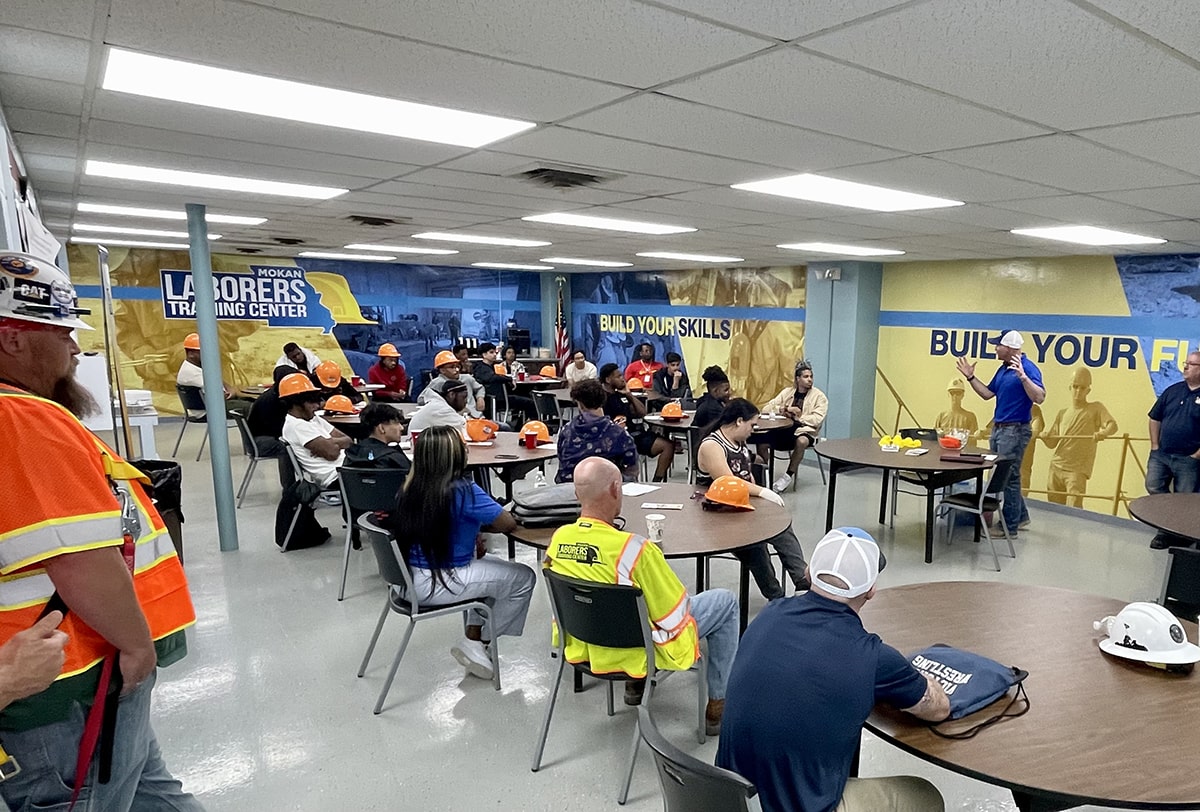
Digging blindly or relying solely on basic paint lines is a thing of the past. Today’s civil infrastructure projects demand high-precision utility locating and automated earthmoving. At the MOKAN training center, our comprehensive skilled trades training ensures laborers master the subsurface technologies driving heavy civil construction, unlocking unmatched opportunities for LiUNA career growth.
Ground-Penetrating Radar (GPR) and Digital Utility Mapping
Accidental utility strikes can freeze a multi-million-dollar project, cause severe safety hazards, and cost tens of thousands of dollars in delays. Modern laborers act as the field leads responsible for preventing these disasters.
MOKAN arms members with the hands-on skills needed to inspect and verify underground hazards:
- Ground-Penetrating Radar (GPR) Operations: Utilizing electromagnetic pulses to map non-metallic utilities, such as PVC water lines and fiberglass conduits, that standard pipe locators miss.
- 3D Utility Surveying & GIS Integration: Uploading real-time subsurface field data directly into Geographic Information Systems (GIS) so site engineers can update underground master plans instantly.
- Non-Destructive Hydro-Excavation: Pairing digital utility mapping with vacuum excavation tech to expose delicate utility lines safely without risking line punctures.


GPS-Guided Machine Control & Smart Excavation
Civil construction relies heavily on integrated machinery. Laborers no longer just check trenches with a traditional grade rod—they collaborate directly with automated equipment via real-time satellite telemetry.
Through MOKAN’s hands-on programs, trainees learn to leverage advanced construction technology:
- Robotic Grade-Checking: Utilizing GPS rover units to verify trench depth, bedding thickness, and slope angles in real time, ensuring 100% compliance with hydraulic drainage specifications.
- Machine Control Collaboration: Working alongside excavator operators equipped with 3D cab displays to ensure precise earthmoving without over-excavating or wasting costly backfill material.
- HDPE Pipe Fusion: Mastering specialized thermal fusion techniques for High-Density Polyethylene (HDPE) piping systems used in leak-free municipal water and gas distribution networks.
Powering Long-Term LiUNA Career Growth
Civil contractors bidding on major public infrastructure projects are required to maintain strict quality control and zero-strike safety records. Laborers who understand subsurface utility technology and automated grade systems are in extremely high demand.
When you complete MOKAN’s advanced skilled trades training, you step onto civil sites not just as labor, but as a specialized infrastructure technician. This technical mastery makes you indispensable to heavy civil contractors, accelerating your path toward roles such as utility locating specialist, grade foreman, or civil project supervisor—ensuring steady, high-paying LiUNA career growth across every economic cycle.

Are you ready to specialize in subterranean civil tech?